Instagram Growth Engineering — Part 10
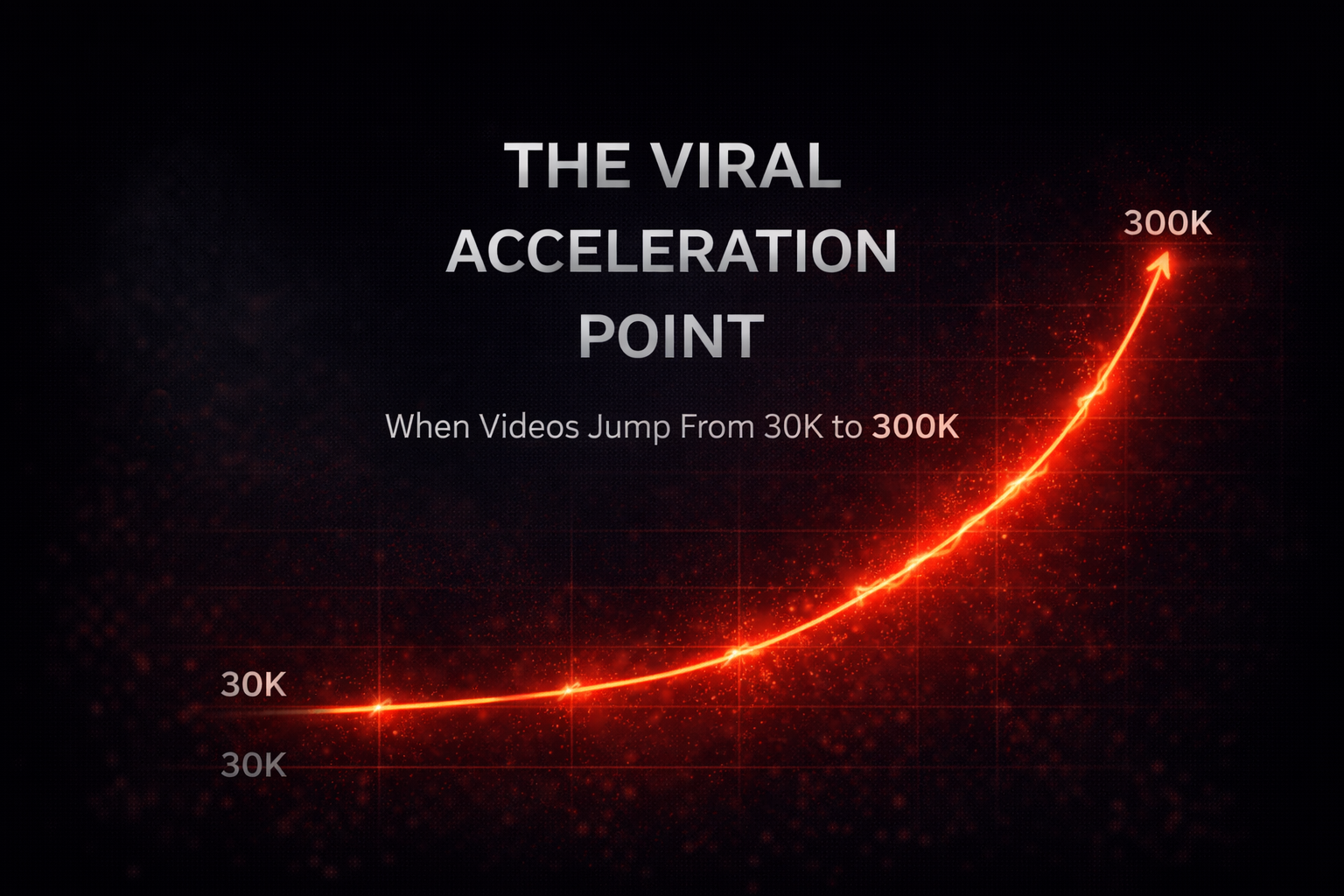
The Viral Acceleration Point
After understanding watch depth, another layer of the growth system becomes visible.
Many creators observe a strange pattern.
A video begins slowly.
It reaches a few thousand views.
Then ten thousand.
Sometimes it stabilizes around twenty or thirty thousand views.
And then, unexpectedly, something changes.
The video suddenly accelerates.
Thirty thousand views become one hundred thousand.
Then two hundred thousand.
From the creator’s perspective, this moment often feels random.
But inside the platform, something much more structured is happening.
This moment is what we call:
The Viral Acceleration Point.
It is the moment when the algorithm's confidence in a piece of content shifts.
And once that confidence changes, distribution expands dramatically.
Understanding this moment is critical because viral growth rarely begins instantly.
It begins when the system becomes confident that attention will remain stable at scale.
I. The Illusion of Random Virality
Creators often describe virality as unpredictable.
A video performs poorly.
Another suddenly explodes.
But when distribution patterns are analyzed across thousands of posts, a different structure appears.
Most viral videos do not explode immediately.
They grow gradually.
First:
300 views.
Then:
1,000.
Then:
5,000.
Then:
20,000.
Each stage represents a distribution test.
The algorithm is not simply pushing content randomly.
It is evaluating behavior.
At each stage the system asks a simple question:
Does attention remain stable?
If the answer continues to be yes, the system expands distribution.
Virality is therefore not a single moment.
It is a chain of confirmations.
II. The Distribution Confidence Threshold
Before acceleration occurs, the algorithm must reach a certain level of confidence.
This confidence is built from multiple signals working together.
The most important signals include:
• scroll-stop rate
• retention stability
• watch depth
• interaction density
• viewer continuation
When these signals align, the system begins predicting something important.
That if more people see this video, they will likely behave the same way.
Once that prediction becomes strong enough, the algorithm increases exposure.
This is the distribution confidence threshold.
Crossing that threshold is what creates the conditions for acceleration.
III. The 30K → 100K Jump
Many creators notice the same growth pattern.
A video grows slowly to around:
20,000–30,000 views.
Then suddenly it jumps to:
100,000 or more.
This moment often feels mysterious.
But it usually represents the point where the content has successfully passed multiple audience tests.
Until this stage, the video has typically been shown to:
• followers
• warm audiences
• interest clusters
When behavior remains stable across these groups, the algorithm becomes more confident.
And that confidence triggers a new stage of exposure.
The content begins reaching much larger discovery audiences.
IV. Cold Audience Validation
One of the most important steps in distribution happens when content is shown to cold audiences.
These viewers do not follow the creator.
They have no previous relationship with the account.
Their behavior is therefore extremely valuable for the algorithm.
If cold audiences:
• stop scrolling
• watch longer than expected
• interact naturally
the system interprets this as a strong signal.
Because the content is no longer relying on familiarity.
It is holding attention purely through structure.
Once this validation happens, distribution can expand rapidly.
V. Audience Cluster Expansion
Modern social platforms do not distribute content to one large audience.
They distribute it through clusters.
Each cluster represents a group of viewers with similar behavior patterns.
For example:
• people interested in education
• people interested in entertainment
• viewers who frequently watch short videos to completion
When a video performs well within one cluster, the algorithm begins testing neighboring clusters.
If the behavior remains stable, distribution spreads outward.
This process creates the expansion waves that lead to viral reach.
VI. Momentum Reinforcement
Acceleration also depends heavily on timing.
During the early stages of distribution, the platform observes how quickly signals appear.
Fast engagement strengthens confidence.
Slow engagement weakens it.
This is why early momentum matters.
When signals such as:
• comments
• saves
• replays
appear quickly, the system interprets the content as highly engaging.
This reinforcement increases the probability of expansion.
VII. Delayed Viral Growth
Sometimes a video remains relatively quiet for hours.
Then suddenly begins accelerating.
This phenomenon often confuses creators.
But it usually indicates delayed signal confirmation.
The algorithm may discover a new audience cluster that responds strongly.
When that happens, the system updates its prediction model.
And distribution resumes.
What appears random is often simply delayed expansion.
VIII. Engineering Viral Probability
Creators often try to replicate viral videos by copying trends.
But virality rarely comes from trends alone.
It comes from structural stability across multiple signals.
Videos that accelerate usually demonstrate:
• strong scroll interruption
• stable retention curves
• high watch depth
• rapid interaction velocity
These signals work together.
When they remain consistent across audience layers, the algorithm increases exposure.
Virality therefore becomes less about luck.
And more about probability.
IX. The Architecture of Viral Growth
At this point the system becomes easier to understand.
Hooks interrupt scrolling.
Retention stabilizes attention.
Distribution expands reach.
Posting frequency maintains signal clarity.
Audience behavior defines interpretation.
Watch depth signals satisfaction.
And the viral acceleration point appears when all these layers align.
Growth is not random.
It is the result of a stable attention structure.
X. Infrastructure Before Virality
Many creators search for shortcuts once their content begins gaining traction.
Some explore advertising.
Others look for the best SMM panel to increase visibility.
But even when creators use external tools, the platform continues evaluating the same behavioral signals.
Exposure alone does not guarantee scale.
Because the algorithm ultimately prioritizes viewer satisfaction.
If attention collapses, distribution slows.
If attention remains stable, the system expands reach.
This is why viral growth rarely happens accidentally.
It happens when the structure of attention is strong enough to sustain scale.
Growth Is Infrastructure
At SMMRangers, we analyze social media growth through an engineering perspective.
Because successful content is rarely random.
It follows patterns.
When creators understand how distribution confidence forms, they stop chasing virality.
Instead, they begin designing content that sustains attention.
And when attention holds, distribution expands.
Content does not scale simply because it exists.
It scales because the system believes attention will continue.
Growth is infrastructure.
What’s Next — Part 11
In the next part of this series we will examine another signal that often determines whether a video accelerates or stalls:
Engagement Velocity.
Because the speed at which interactions appear can dramatically influence distribution decisions.
And understanding that signal reveals why some videos gain momentum immediately while others fade before reaching scale.