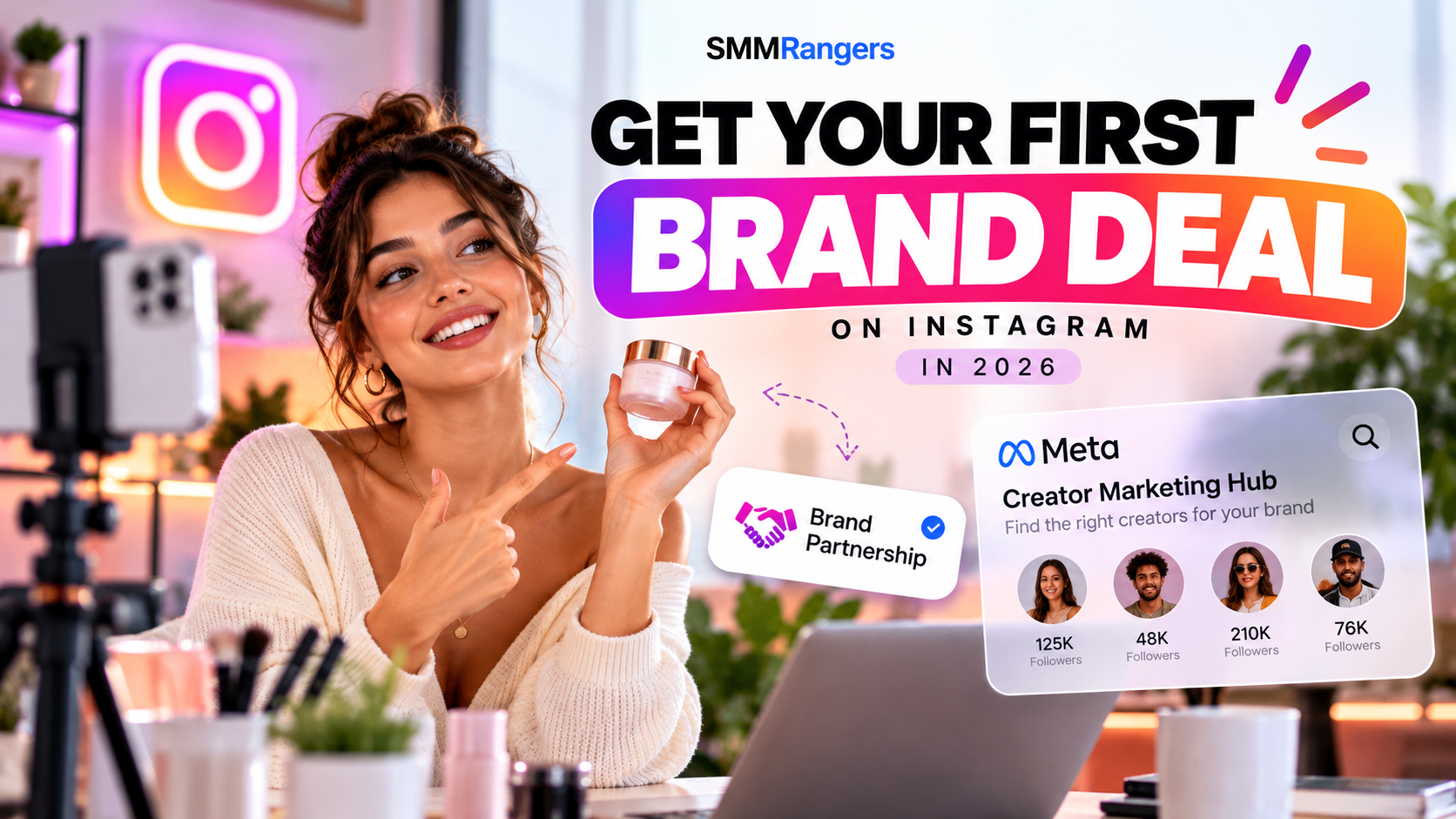
How to Get Brand Deals on Instagram in 2026: Meta Creator Marketplace Guide
Updated: October 24, 2026
You don't need to be a celebrity to start thinking about Instagram brand collaborations.
Maybe you create beauty tutorials, share recipes, review products, or make entertaining Reels. You've started building an audience, and now you're wondering:
How do brands actually find Instagram creators — and how can I get my first brand deal?
Meta's creator marketing tools are making the process more organized.
In October 2026, Meta confirmed the global rollout of its Creator Marketing Hub to advertisers, bringing creator discovery, content evaluation, and partnership advertising into one place.
The company says more than 10 million creators are now discoverable through the system.
But getting discovered is only the beginning.
In this guide, we'll explain how Instagram Creator Marketplace works, who can join, how brands evaluate creators, and what you can do to prepare your account for paid partnerships.
What Is Instagram Creator Marketplace?
Instagram Creator Marketplace is Meta's platform for connecting eligible creators with businesses interested in branded content and advertising partnerships.
It helps creators present their work and receive collaboration opportunities.
On the business side, Meta Creator Marketing Hub gives advertisers tools to discover creators, review relevant content, and organize partnership campaigns.
The names are slightly different because they describe different sides of the collaboration process.
For creators: Meta Creator Marketplace.
For brands and advertisers: Meta Creator Marketing Hub.
Both are part of Meta's broader creator partnership ecosystem.
What's New With Meta Creator Marketing Hub in 2026?
Meta has expanded its creator marketing tools to make partnerships easier to discover and manage.
During its October 21, 2026 earnings call, Meta confirmed that Creator Marketing Hub had completed its global rollout to advertisers.
More than 10 million creators are discoverable through the platform.
Meta is also integrating its AI Business Assistant into the hub, allowing advertisers to search for creators conversationally and receive guidance about potential partnerships.
Other developments include:
More detailed creator discovery filters
Improved recommendations for relevant creator content
Partnership messaging tools
Content permission management
Tools for turning eligible creator content into partnership ads
Expanded API capabilities for creator discovery and marketing workflows
Some capabilities are rolling out progressively, so the exact tools available may vary by account and market.
For creators, these changes could make it easier for suitable brands to discover their work.
However, being discoverable does not guarantee receiving a partnership offer.
How to Join Instagram Creator Marketplace in 2026
If you want brands to discover your account through Meta's marketplace, start by checking your eligibility.
Meta's current eligibility guidance includes requirements such as:
Being at least 18 years old
Having a public professional Instagram account
Having at least 1,000 followers
Meeting applicable partner monetization policies
Being in an eligible location
Availability and eligibility may change, so always check the requirements shown in Instagram.
Step 1: Switch to a professional account
Open Instagram and go to your profile.
If you're using a personal account, review the option to switch to a professional account.
Choose the account type that best matches your activity.
Step 2: Open your Professional Dashboard
From your Instagram profile, open Professional dashboard.
Step 3: Find Branded Content
Look for the branded content tools available to your account.
Step 4: Join Creator Marketplace
If you're eligible and the feature is available, select the option to join Creator Marketplace.
Review the information and applicable terms.
Step 5: Set up your creator profile
Complete any available portfolio or creator information fields.
Highlight the content categories and partnerships that best represent your work.
If you cannot find the option, it may not yet be available to your account, or your account may not meet the current requirements.
Can You Get Instagram Brand Deals With Only 1,000 Followers?
Potentially, yes.
You don't necessarily need hundreds of thousands of followers to collaborate with a brand.
Smaller creators may be attractive to businesses looking for a particular audience, local community, or content style.
For example, a small skincare creator may have an audience that regularly asks detailed product questions.
A local food creator might have fewer followers than a national celebrity but reach people who actually visit restaurants in a specific city.
A handmade crafts creator might appeal to a small business selling art supplies.
The key is relevance.
Follower count matters, but it isn't the only factor brands can evaluate.
Also remember that meeting the marketplace's minimum follower requirement does not guarantee acceptance, visibility, or paid work.
What Do Brands Look for in Instagram Influencers?
Different brands have different campaign goals.
Some want awareness.
Others want product demonstrations, website visits, or sales.
When reviewing creators, brands may consider several factors.
1. Audience relevance
Does your audience match the people the brand wants to reach?
For example, a company selling running shoes may prefer a fitness creator with an engaged running community over a larger account focused on unrelated entertainment.
2. Content quality
Brands often want creators who can communicate clearly and produce content that fits their products.
Good lighting, understandable audio, thoughtful editing, and consistent presentation can help.
Expensive equipment isn't always necessary.
3. Engagement quality
Likes and comments can provide context, but brands may also consider whether interactions appear genuine and relevant.
A smaller account with thoughtful audience conversations can be valuable.
4. Audience insights
Brands may want to understand where your audience lives, which age groups you reach, and how your content performs.
Professional account insights can help provide this information.
5. Brand compatibility
A creator's personality, content style, and values should fit the campaign.
A good partnership needs to make sense to both the creator and their audience.
6. Reliability
Brands may prefer creators who communicate professionally, understand deadlines, and follow agreed campaign requirements.
These practical qualities matter even when an account is relatively small.
How to Make Your Instagram Profile Attractive to Brands
Before applying for collaborations, review your profile from a potential advertiser's perspective.
Write a clear bio
Your bio should explain what you create.
For example:
"Skincare reviews & everyday beauty tips
Honest product demos | Beginner-friendly routines
Business inquiries: [your professional email]"
Use a contact method you're comfortable sharing publicly.
Choose a recognizable content niche
You don't need to post about only one subject forever.
But your account should communicate a clear theme.
Examples include beauty, fitness, food, gaming, travel, parenting, technology, or handmade products.
Pin your strongest posts
Choose posts that demonstrate your content style and the value you provide.
A product review, useful tutorial, or well-produced Reel can help a brand understand your abilities.
Prepare a simple media kit
A media kit can include:
A short introduction
Your main content categories
Audience demographics, where available
Recent reach and engagement data
Examples of previous work
Contact information
Available collaboration formats
You can create a simple one-page PDF rather than an elaborate presentation.
Make contacting you easy
Check your professional contact settings and partnership messages regularly.
If brands cannot reach you, a promising opportunity may be missed.
How to Get Your First Instagram Brand Deal
You don't have to wait passively for a brand to discover you.
Here are practical steps to get started.
Step 1: Identify relevant brands
Create a shortlist of businesses that fit your audience and content.
A small food creator could approach local cafés, kitchenware companies, or specialty food brands.
Choose businesses you would genuinely feel comfortable recommending.
Step 2: Study their existing collaborations
Look at the types of creators they work with.
Notice the content formats they use and whether their campaigns focus on tutorials, product demonstrations, or lifestyle content.
Step 3: Create relevant content examples
If you want to collaborate with skincare brands, publish thoughtful skincare content.
If you're interested in travel partnerships, demonstrate your ability to produce useful travel videos.
Brands need to see what you can create.
Step 4: Send a short professional pitch
Introduce yourself, explain why your audience fits the brand, and suggest a specific collaboration idea.
Avoid sending identical generic messages to dozens of businesses.
Step 5: Agree on deliverables
Before accepting a collaboration, clarify:
How many posts or Reels you'll create
When the content is due
Whether the brand can use your content in paid advertising
How long the brand can use it
What you'll be paid
When and how payment will happen
Written agreements can help prevent misunderstandings.
What Are Instagram Partnership Ads?
Partnership ads allow advertisers to promote eligible creator content with the necessary permissions.
For example, a skincare creator might publish a product demonstration.
With the appropriate authorization, the skincare brand could use that content in a paid Instagram campaign.
This differs from an ordinary sponsored post that receives only organic distribution.
Partnership ads can involve additional content usage rights, permissions, and payment arrangements.
Creators should understand exactly what advertising rights they're granting before approving a request.
If a brand wants to use your video in ads for several months, that may justify a different fee from creating a single organic post.
How Much Do Instagram Brand Deals Pay?
There is no universal price for an Instagram collaboration.
Payment can depend on:
Audience size and relevance
Content production requirements
Engagement and reach
Campaign duration
Usage rights
Exclusivity
Number of deliverables
Brand budget
Some collaborations involve a fixed fee.
Others may include product gifting, affiliate commissions, performance-based compensation, or combinations of these arrangements.
Don't assume that free products are automatically appropriate payment for every campaign.
Consider the time required to produce the content and the rights you're giving the brand.
For marketplace campaigns, review the specific payment terms carefully. Payments may be handled directly between the brand and creator rather than processed by Instagram.
Do You Need Thousands of Likes to Get Brand Deals?
No fixed number of likes guarantees a collaboration.
Brands may evaluate a creator's performance in the context of their audience and campaign goals.
For example:
Creator A
50,000 followers and broad entertainment content.
Creator B
4,000 followers and a highly specific audience interested in home baking.
A baking equipment brand might find Creator B more relevant, even though Creator A has a much larger following.
This is a hypothetical example, not a claim that smaller accounts always outperform larger ones.
The best fit depends on the campaign.
Can Buying Instagram Followers Help You Get Brand Deals?
A larger displayed follower count doesn't necessarily make an account more attractive to advertisers.
Brands may examine audience quality, content performance, demographic fit, and signs of authentic engagement.
Artificially inflated metrics can create misleading impressions and may violate Instagram's platform policies.
Purchased followers do not guarantee genuine audience interest or eligibility for creator marketing programs.
SMMRangers offers Instagram-related social media marketing service categories with individual specifications and limitations.
However, these services should not be presented as a guaranteed route to brand deals, marketplace eligibility, or authentic influencer growth.
If your goal is to build a sustainable creator business, focus on creating useful content and developing genuine relationships with your audience.
Common Instagram Brand Deal Mistakes to Avoid
Accepting every collaboration
A brand that doesn't fit your content may confuse your audience.
Choose partnerships thoughtfully.
Ignoring usage rights
An organic sponsored post and a paid advertising license are different arrangements.
Understand what you're agreeing to.
Failing to disclose sponsored content
Follow Instagram's branded content rules and applicable advertising disclosure requirements.
Sharing misleading analytics
Provide accurate information about your audience and content performance.
Paying suspicious accounts for promised brand deals
Be cautious of messages asking you to pay fees to unlock a supposedly guaranteed collaboration.
Verify the brand and its representatives before sharing sensitive information.
Giving away account access
Legitimate brand collaborations generally don't require you to disclose your Instagram password.
Use official permission and collaboration tools where applicable.
Frequently Asked Questions
How do I get brand deals on Instagram in 2026?
Build a clear content niche, improve your profile, prepare a media kit, join Creator Marketplace if eligible, and approach relevant brands with specific collaboration ideas.
How many followers do I need for Instagram Creator Marketplace?
Meta's current guidance includes a minimum of 1,000 followers, alongside age, account type, policy, and location requirements.
Can small Instagram creators get paid partnerships?
Yes. Smaller creators can potentially work with brands when their audience, content, and campaign fit are relevant.
Is Instagram Creator Marketplace free for creators?
Meta's creator marketplace is designed to connect eligible creators with brands. Review the current terms in Instagram for your account and region.
Does joining Creator Marketplace guarantee brand deals?
No. Joining makes it possible to participate in the marketplace, but it doesn't guarantee invitations or payment.
What's the difference between Creator Marketplace and Creator Marketing Hub?
Creator Marketplace is the creator-facing experience. Creator Marketing Hub is the advertiser-facing environment for discovering creators and managing partnership opportunities.
Can brands use my Reels in paid advertisements?
They may be able to use eligible creator content in partnership ads when the appropriate permissions are granted. Review usage terms before agreeing.
Can I get a brand deal without being famous?
Yes. Brands may work with niche creators and smaller accounts when the audience and content are a good match.
Final Thoughts
Instagram brand collaborations are becoming more structured as Meta expands its creator marketing tools.
For creators, the opportunity isn't simply to collect more followers.
It's to build a recognizable profile, produce content that serves a specific audience, and demonstrate why a brand would benefit from working with you.
Start with your profile.
Make your content consistent.
Understand your audience.
And approach potential partnerships professionally.
You don't need to be the biggest creator in your niche. You need to give the right brand a compelling reason to work with you.
For more Instagram growth guides, creator economy updates, and social media marketing resources, explore the SMMRangers blog.