YouTube Shorts Not Getting Views? October 2026 Algorithm Update Explained
Updated: October 20, 2026
Are your YouTube Shorts suddenly getting fewer views? Maybe your videos used to reach thousands of viewers, but now they’re struggling to get noticed.
You’re not the only creator asking what’s happening.
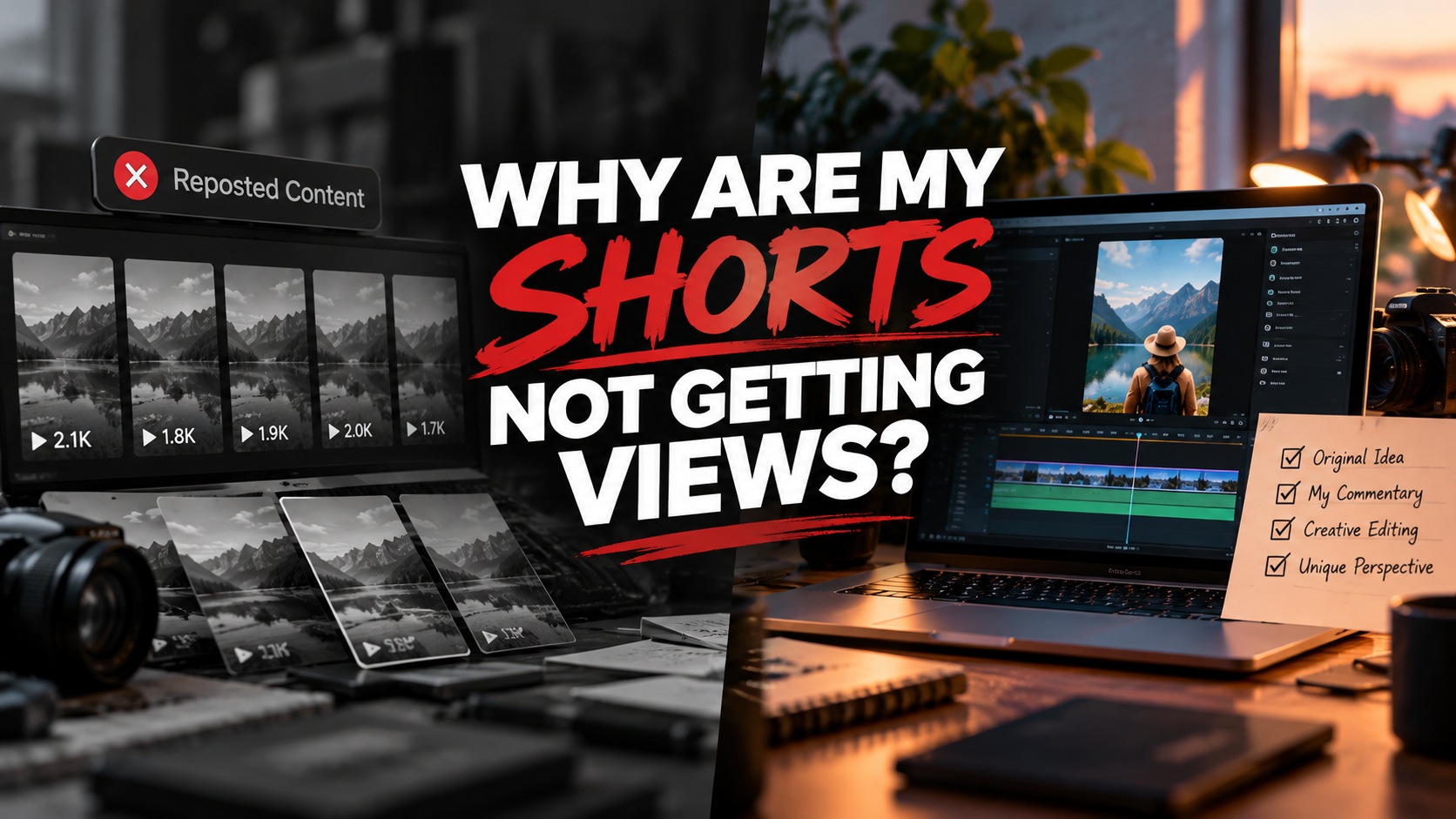
On October 1, 2026, YouTube announced an important update to its Shorts recommendation system. The platform is placing greater emphasis on original content while reducing the visibility of videos reposted from other creators without meaningful changes.
But does this explain why your Shorts aren’t getting views?
Not necessarily.
In this guide, we’ll explain what changed, how the update may affect your channel, and what you can do to improve your YouTube Shorts strategy.
What Changed in the YouTube Shorts Algorithm in October 2026?
YouTube announced that its recommendation systems would give greater priority to original content.
The update specifically targets channels that primarily collect and repost videos created by other people without adding meaningful value.
According to YouTube, channels built around this type of content may receive less distribution in the Shorts feed.
The platform encourages creators who use third-party clips to contribute something original, such as:
- Their own commentary or analysis
- Meaningful creative editing
- Additional context or explanations
- Original storytelling
- A distinctive personal perspective
Simply cropping someone else’s video, changing its speed, or applying a basic template may not be enough.
Important: This update does not mean every reused video is banned or that every creator will experience a decline in views.
YouTube is changing how certain content is recommended, not announcing a universal reduction in Shorts visibility.
Why Are My YouTube Shorts Not Getting Views?
There are several possible reasons your Shorts might be underperforming.
The October algorithm update is one possibility, but it shouldn’t be your automatic explanation.
1. You’re Reposting Content Without Adding Original Value
This is the most direct connection to YouTube’s October update.
If your channel mainly republishes clips from podcasts, livestreams, movies, or other creators, your Shorts may receive less distribution.
For example, imagine two channels sharing a clip from the same podcast.
One uploads the clip without additional commentary.
The other uses a short excerpt to explain an idea, add context, or offer a thoughtful response.
The second video provides a clearer original contribution.
That doesn’t guarantee more views, but it better reflects the type of creative value YouTube says it wants to prioritize.
2. Viewers Are Swiping Away Too Quickly
Shorts compete for attention in a fast-moving feed.
If viewers repeatedly swipe away before watching, your content may struggle to maintain momentum.
Try making the beginning of your video immediately understandable.
Avoid long introductions and give viewers a clear reason to continue watching.
3. Your Content Doesn’t Match Audience Interests
YouTube personalizes recommendations using multiple signals, including viewing history, interests, and engagement.
A video may perform differently depending on which viewers encounter it.
If your channel frequently switches between unrelated subjects, it can become harder to understand which audience responds best to your content.
Consider creating several Shorts around a consistent topic and comparing their performance.
4. Your Videos Feel Too Similar
Using a recognizable format isn’t necessarily a problem.
However, repeatedly publishing nearly identical videos with minimal creative differences can make your content less interesting.
Experiment with different examples, stories, questions, and visual approaches.
The goal is to make each Short worth watching on its own.
5. You’re Judging Performance Too Early
A Short that performs poorly during its first few hours isn’t necessarily a failure.
YouTube does not guarantee that every video will receive immediate distribution.
Instead of making conclusions from one upload, review performance across multiple videos and a longer period.
Does YouTube’s New Algorithm Punish Reuploaded Shorts?
YouTube has specifically stated that channels primarily reposting other creators’ videos without significant changes may receive less distribution.
However, there’s an important distinction between reusing content and creating something new from existing material.
Content That May Be Affected
Examples include:
- Reposting another creator’s Short without meaningful changes
- Uploading collections of viral clips without original commentary
- Copying videos from other platforms with minimal editing
- Repeatedly publishing third-party footage using nearly identical templates
Content With More Original Value
Examples include:
- Providing educational analysis of a video clip
- Creating a reaction with substantial commentary
- Using a short excerpt to explain a broader topic
- Transforming existing material through original storytelling
- Adding a genuinely different creative perspective
These examples are not guarantees of recommendation eligibility or copyright compliance.
Even substantially edited content may still be subject to copyright rules.
What About Clips From Your Own Videos?
YouTube’s October announcement specifically focuses on content reuploaded from other creators.
It does not announce a general penalty for turning your own long-form videos into Shorts.
If you regularly create Shorts from your own podcasts, tutorials, or livestreams, you can continue experimenting with that format.
How to Fix YouTube Shorts Getting Low Views
There isn’t a universal fix for low Shorts views.
However, you can take several practical steps to identify problems and improve your content.
Step 1: Check Your YouTube Studio Analytics
Open YouTube Studio and review your Shorts performance.
Look at metrics such as:
- Views
- Engaged views
- Shown in feed, where available
- Stayed to watch versus swiped away
- Average view duration
- Audience retention
- Traffic sources
These metrics help answer different questions.
For example, a Short may be shown to viewers frequently but fail to hold their attention.
Another video may retain viewers well but receive relatively limited distribution.
Those situations call for different improvements.
Step 2: Improve the First Few Seconds
Make your opening clear and interesting.
Instead of beginning with a lengthy introduction, immediately show viewers what they can expect.
For example:
Weak opening: “Hey everyone, welcome back to my channel. Today I’m going to talk about…”
Stronger opening: “Three mistakes that make your phone videos look unprofessional.”
A strong opening isn’t a guarantee of more views, but it gives viewers a clearer reason to stay.
Step 3: Add Something Original
If you regularly use existing clips, ask yourself:
“What does my version contribute that viewers cannot get from the original?”
You might add an explanation, personal experience, creative transformation, or a different perspective.
Simply adding subtitles or changing the video format doesn’t necessarily create meaningful original value.
Step 4: Focus on a Clear Content Theme
Choose a subject your intended audience genuinely cares about.
For example, a fitness creator might focus on beginner exercises, workout mistakes, and practical training advice.
A gaming creator could publish tips, challenges, and original gameplay commentary.
Consistent subject matter can also make your channel easier for viewers to understand.
Step 5: Test Different Video Formats
Experiment with:
- Short tutorials
- Before-and-after demonstrations
- Educational explanations
- Original reactions
- Product demonstrations
- Behind-the-scenes videos
Compare results rather than assuming one format works for every audience.
Step 6: Review Results Over Time
Avoid changing your entire strategy because one video underperforms.
Compare several Shorts over similar periods.
Look for patterns in retention, viewer interest, and traffic sources.
Use those observations to guide your next videos.
Does Deleting and Reuploading Shorts Help?
Deleting and reposting a video isn’t a guaranteed solution.
If the original video struggled because viewers weren’t interested, uploading the same content again may not solve the underlying problem.
Before deleting anything, review your analytics.
Consider whether the opening, pacing, subject, or creative approach could be improved.
If you decide to publish a revised version, make meaningful changes rather than relying on repeated uploads of identical content.
Do Hashtags Help YouTube Shorts Get More Views?
Hashtags can help describe your content and connect it with relevant topics.
However, adding more hashtags doesn’t guarantee greater distribution.
Use a small number of relevant terms that accurately describe your video.
For example, a cooking tutorial might use:
#CookingTips #EasyRecipes #YouTubeShorts
Avoid unrelated or misleading hashtags.
Your content itself should remain the main focus of your growth strategy.
Does Buying YouTube Shorts Views Help the Algorithm?
There is no reliable evidence that purchasing third-party views automatically improves organic Shorts recommendations.
YouTube evaluates numerous signals when recommending videos, and artificial engagement can violate its policies.
Purchased views should not be confused with genuine audience interest, qualified engagement, or sustainable channel growth.
Creators should also be cautious about services promising guaranteed virality, algorithm manipulation, or monetization eligibility.
The safest long-term strategy is to focus on original content and authentic viewers.
What Does the Update Mean for YouTube Creators and Resellers?
The October 2026 update matters to both individual creators and businesses managing multiple channels.
For individual creators, the main takeaway is to focus on original contributions and understand their analytics.
For agencies, the update creates an opportunity to review clients’ content strategies, especially channels relying heavily on reused clips.
For SMM resellers, transparent communication is essential.
A decline in organic Shorts recommendations does not automatically indicate that a third-party service has stopped working.
Likewise, a completed service order does not prove that YouTube’s recommendation system will promote the video.
These are separate performance questions that should be evaluated independently.
Explore YouTube Marketing Resources With SMMRangers
At SMMRangers, we provide social media marketing services and resources for creators, agencies, and resellers.
Our platform includes YouTube-related service categories, subject to current availability.
We also publish guides about social media algorithms, platform updates, creator tools, and common account growth challenges.
Third-party engagement services cannot guarantee organic reach, monetization approval, or recommendation placement, and artificial engagement may violate YouTube’s rules.
For creators who want sustainable growth, understanding platform updates and producing valuable content should remain central to their strategy.
Visit SMMRangers to explore our latest resources and available services.
Frequently Asked Questions
Why are my YouTube Shorts suddenly getting zero views?
Possible explanations include limited initial distribution, audience interest, recommendation eligibility, or content performance. A low view count alone doesn’t establish the cause.
Did YouTube change the Shorts algorithm in October 2026?
Yes. On October 1, YouTube announced changes intended to prioritize original content and reduce recommendations for channels primarily reposting other creators’ videos without meaningful additions.
Does YouTube penalize reused Shorts?
Channels that primarily repost other creators’ videos without substantial changes may receive less Shorts feed distribution. Not every use of existing material is automatically penalized.
Can I still create Shorts from my own long-form videos?
Yes. YouTube’s October announcement focuses on reuploads of other creators’ content, not a blanket restriction on repurposing your own videos.
Does adding captions make a reused Short original?
Not necessarily. YouTube emphasizes meaningful commentary, creative editing, storytelling, or a distinctive perspective rather than minor technical changes.
How long does it take for YouTube Shorts to get views?
There is no guaranteed timeline. Distribution and performance can vary between videos and channels.
Can hashtags make a Short go viral?
Hashtags may help describe your content, but they do not guarantee virality or increased recommendations.
Will the new algorithm affect YouTube Shorts monetization?
The October announcement concerns recommendations. YouTube’s monetization policies separately address reused, repetitive, and inauthentic content.
Final Thoughts
YouTube’s October 2026 Shorts update sends a clear message: originality matters.
Channels that primarily repost other creators’ content without adding meaningful value may find it harder to reach viewers through Shorts recommendations.
But if your Shorts aren’t getting views, don’t assume the algorithm update is automatically responsible.
Review your analytics, understand your audience, improve your storytelling, and experiment with content that offers something genuinely useful or entertaining.
For more YouTube guides, creator insights, and social media marketing resources, visit SMMRangers.com.