Facebook Algorithm 2026: How the New AI Feed Works
Updated: October 19, 2026
Facebook is giving users more control over what appears in their feeds.
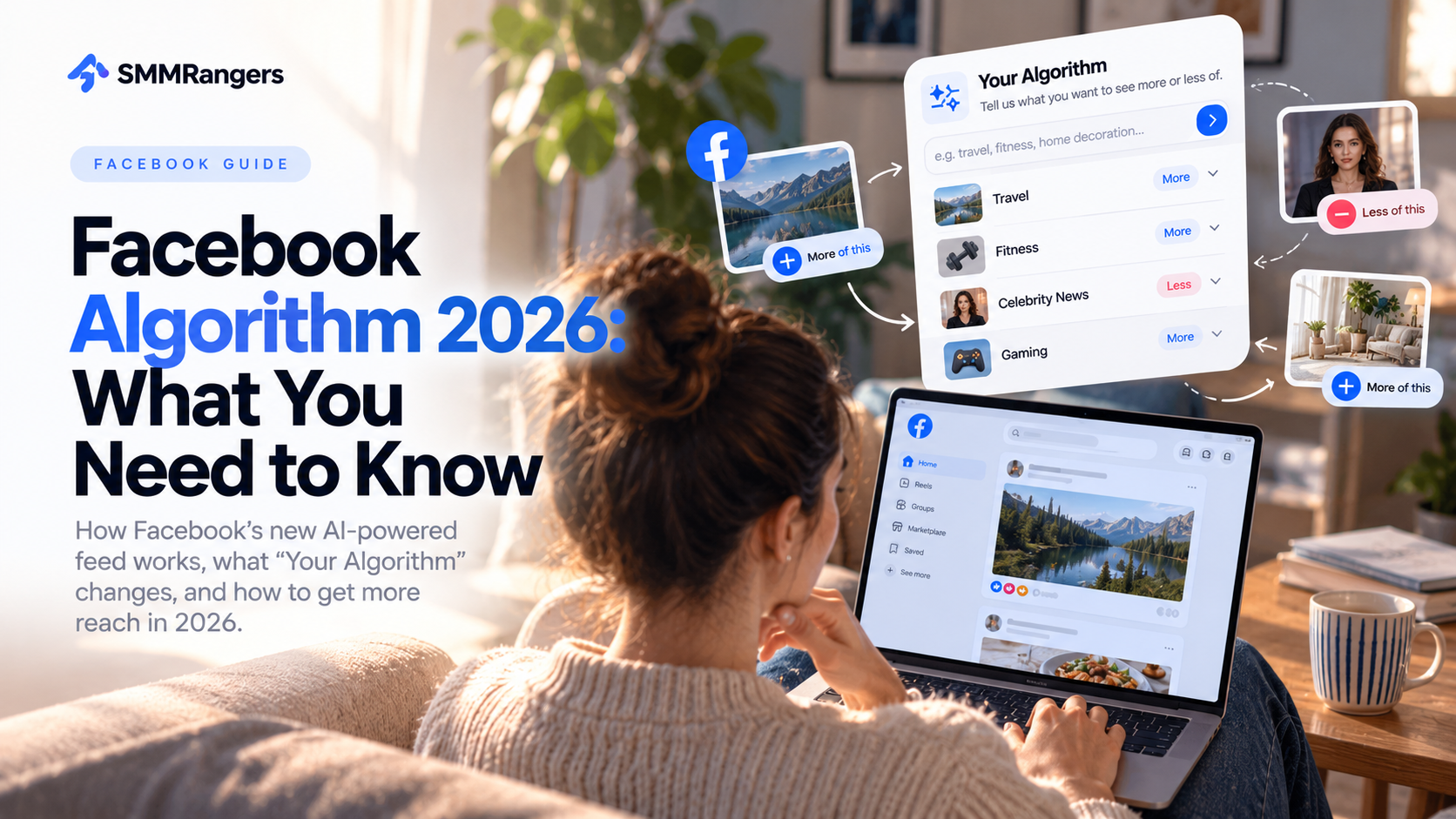
On October 13, 2026, Meta announced Your Algorithm, a new AI-powered feature that allows Facebook users to customize the content they see in Feed and Reels.
Instead of relying entirely on Facebook to predict their interests, users can now tell the platform what they want to see more or less of.
But what does this mean for your Facebook reach, followers, engagement, and Reels views?
Let's explore how Facebook's new AI-powered recommendation tools work, what has changed, and how creators and businesses can adapt.
What Changed in the Facebook Algorithm in October 2026?
Facebook's recommendation system has always considered different signals to decide which posts and videos appear in your feed.
These include your interactions, viewing behavior, and connections with other accounts.
The October 2026 update introduces a more direct way to influence those recommendations.
With Your Algorithm, Facebook users can:
Choose topics they want to see more frequently.
Identify subjects they are no longer interested in.
Describe their preferences using natural language.
Provide detailed feedback about individual posts.
Adjust their Feed and Reels recommendations in real time.
Meta says its AI-powered ranking systems can respond to these preferences during the same browsing session.
This is an important development because users no longer need to rely exclusively on their past behavior to communicate their interests.
They can also express those interests directly.
What Is Facebook's New “Your Algorithm” Feature?
Your Algorithm is a personalization tool that gives users more influence over Facebook's content recommendations.
Imagine that you enjoy cooking videos but have recently started seeing too much celebrity news.
Previously, you could interact with more cooking content and select options such as “Not interested” on unwanted posts.
Now, Facebook is introducing a more conversational approach.
You can tell the system that you want to see more cooking tutorials and fewer celebrity-related recommendations.
Facebook uses AI, including large language models, to interpret the context and intent behind your preferences.
The goal is to make content recommendations more relevant to individual users.
However, this does not mean users have complete control over every post appearing in their feeds.
Facebook still operates its broader recommendation and ranking systems.
How to Customize Your Facebook Algorithm in 2026
If the feature is available on your account, you can adjust your recommendations directly from Facebook.
Step 1: Open Facebook
Launch Facebook and browse your Feed or Reels.
Step 2: Find the Three-Dot Menu
Locate the three-dot menu on a post.
Meta has updated this menu to make content personalization tools easier to access.
Step 3: Select “Your Algorithm”
Look for the Your Algorithm option.
From there, you can manage topics that interest you and subjects you would prefer to see less frequently.
Step 4: Describe Your Interests
You can provide more specific preferences instead of relying only on predefined categories.
For example:
More beginner-friendly fitness videos
Fewer celebrity gossip posts
More home decoration tutorials
More educational technology content
These examples illustrate the types of interests you might express, rather than guaranteed commands or exact interface options.
Step 5: Use “Interested” and “Not Interested”
Facebook also allows you to provide feedback directly on individual posts.
Depending on the content, Facebook may ask follow-up questions to better understand your preferences.
Meta says these changes can influence recommendations in real time.
Note: Your Algorithm is being rolled out, so availability may vary by account and region.
Does Facebook's New AI Algorithm Affect Reach?
Potentially, but the impact on individual creators is not yet established.
The important distinction is between what Meta has officially announced and what marketers can reasonably infer.
Meta has confirmed that users can provide more detailed feedback about their interests.
It has not announced that every creator will experience an immediate increase or decrease in reach.
Still, the update suggests that understanding your audience's interests remains essential.
Consider two Facebook pages.
One publishes general content about many unrelated subjects.
The other consistently shares practical home gardening tutorials for a clearly defined audience.
If users actively tell Facebook they want more gardening content, that preference may influence which recommendations they receive.
This does not guarantee that the gardening page will reach those users.
However, it illustrates why topical relevance is worth considering when planning Facebook content.
Why Are My Facebook Views and Engagement Dropping?
If your Facebook posts or Reels are receiving fewer views than expected, it can be tempting to blame the latest algorithm update.
But a decline in engagement does not necessarily mean Facebook has penalized your account.
Several factors may contribute.
1. Your Content Isn't Matching Audience Interests
If your followers originally subscribed for fitness content but you suddenly begin publishing unrelated videos, some may stop interacting.
Review which subjects consistently generate meaningful audience responses.
2. Your Reels Aren't Holding Attention
A video may attract initial views without keeping people interested.
Experiment with stronger openings, clearer storytelling, and more focused editing.
3. Your Posting Strategy Has Changed
Changes in content format, frequency, or subject matter can affect performance.
Compare similar posts over several weeks rather than judging results from a single upload.
4. Your Audience Is Becoming Less Active
Follower counts do not necessarily reflect how many people currently engage with your content.
Some followers may have changed interests or become less active on Facebook.
5. Your Content May Face Recommendation Limitations
Facebook has content standards and recommendation guidelines that can affect distribution.
If you suspect a restriction, review any available account or page status information rather than assuming an algorithm penalty.
Important: Meta has not established that the October 2026 Your Algorithm update is responsible for any specific account's declining reach.
Does Facebook Still Care About Likes, Followers, and Comments?
Yes, interactions remain part of Facebook's recommendation ecosystem.
Meta has explained that its ranking systems consider numerous signals, including what users like, comment on, and watch.
But these signals are not the entire picture.
Facebook's systems attempt to predict which content people will find relevant or meaningful.
The new Your Algorithm feature adds another way for users to communicate those preferences.
Facebook Followers
Followers can help creators establish an audience and provide opportunities for repeat engagement.
However, having more followers does not guarantee that every post will reach more people.
Facebook Likes and Reactions
Likes and reactions can indicate that someone responded to your content.
They are useful engagement metrics, but they should not be treated as a guaranteed method of increasing organic reach.
Facebook Comments
Comments can provide valuable audience feedback and encourage discussion.
Relevant conversations are generally more useful for understanding your audience than simply collecting a large number of comments.
Facebook Reels Views
Views help creators understand how often their videos are being watched under Facebook's reporting rules.
To evaluate content performance more effectively, consider views alongside other available metrics, such as watch time, shares, and audience interactions.
The main takeaway is simple:
No single engagement metric guarantees success with Facebook's recommendation system.
How to Get More Facebook Reels Views in 2026
There is no guaranteed formula for increasing Facebook Reels views.
However, creators can improve their content strategy by testing practical approaches.
Create Content for a Specific Audience
Identify who your videos are intended for.
A small business selling handmade products, for example, might focus on product demonstrations, packaging videos, and behind-the-scenes content.
Make Your Videos Easy to Understand
Communicate the subject of your Reel quickly.
Use clear visuals and captions when they improve accessibility.
Experiment With Different Formats
Try educational videos, product demonstrations, tutorials, and short storytelling formats.
Compare results to identify what works for your audience.
Encourage Genuine Interaction
Ask relevant questions and respond to meaningful comments.
Avoid engagement bait or misleading claims designed only to generate reactions.
Review Your Performance Regularly
Track the metrics available through Facebook's professional tools.
Look for consistent patterns across multiple posts.
A successful content strategy should be based on observed audience behavior, not assumptions about secret algorithm tricks.
What Does the New Facebook Algorithm Mean for Small Businesses?
For small businesses, the Your Algorithm update reinforces the importance of publishing content that matches genuine customer interests.
A local bakery, for example, might share decorating tutorials, new product announcements, or behind-the-scenes baking videos.
A fitness studio could publish exercise demonstrations and beginner-friendly training advice.
A clothing brand might create styling tutorials and product comparisons.
These approaches give potential customers a clear reason to follow and interact with a business.
The update does not guarantee that niche content will receive more distribution.
It does, however, make audience relevance a sensible consideration when planning future content.
What Does This Mean for Social Media Agencies and Resellers?
Social media agencies and resellers should pay attention to the growing role of personalization in content discovery.
Clients may ask whether Facebook's new AI tools will change their reach or engagement.
The most useful response is to explain what is known and what remains uncertain.
Agencies can help clients by:
Reviewing existing audience and content performance.
Identifying subjects that attract meaningful engagement.
Testing new content formats.
Monitoring changes in Facebook's official announcements.
Separating organic performance from paid or third-party activity.
For resellers, transparent communication is especially important.
Follower counts, reactions, and views are different metrics with different limitations.
None should be presented as a guaranteed way to influence Facebook's AI recommendation system.
Where Does SMMRangers Fit Into a Facebook Marketing Strategy?
At SMMRangers, we provide social media marketing services for individual users, businesses, agencies, and resellers.
Our platform includes Facebook-related services such as followers, reactions, and video engagement options, subject to current availability.
These services are separate from Facebook's organic recommendation system.
Third-party engagement does not guarantee improved rankings, authentic audience interest, or increased organic reach. Artificial engagement may also conflict with platform rules.
For businesses developing a long-term Facebook strategy, original content, audience research, and genuine community interaction remain important foundations.
SMMRangers also provides resources to help users understand social media features, marketing trends, and changes across major platforms.
Explore available services and information at SMMRangers.com.
Frequently Asked Questions
Did Facebook change its algorithm in October 2026?
Meta announced Your Algorithm on October 13, 2026. The feature introduces AI-powered tools for customizing Feed and Reels recommendations. It is not a confirmed replacement of Facebook's entire ranking system.
What is Facebook's Your Algorithm feature?
Your Algorithm allows users to directly manage topics they want to see more or less of and provide natural-language feedback about their interests.
Can I reset my Facebook algorithm?
Your Algorithm provides new personalization controls, but Meta has not described the feature as a complete reset of all recommendation history.
Does the new Facebook algorithm affect Reels?
Yes. Meta specifically states that Your Algorithm can influence recommendations in both Feed and Reels.
Does buying Facebook likes improve organic reach?
There is no reliable basis for claiming that purchased likes automatically improve organic reach. Artificial engagement can also create account and policy risks.
Why am I getting fewer Facebook views in 2026?
Possible explanations include changes in audience interests, content performance, posting habits, or recommendation eligibility. A decline alone does not establish that an algorithm update caused it.
Can I tell Facebook what content I want to see?
Yes. With Your Algorithm, users can express interests directly and provide more detailed feedback about recommended content, where the feature is available.
Is Facebook using AI to recommend content?
Yes. Meta says its recommendation systems use AI, including large language models, to interpret user interests, context, and natural-language preferences.
Final Thoughts
Facebook's October 2026 Your Algorithm update represents a meaningful step toward more interactive content personalization.
Users can now communicate their interests more directly instead of relying entirely on past interactions.
For creators and businesses, the lesson isn't to chase another supposed algorithm trick.
It's to understand your audience, create relevant content, and evaluate performance using reliable metrics.
The future impact of these new controls on creator reach remains to be seen.
Stay informed about social media updates, creator tools, and digital marketing trends with SMMRangers.